How to get rid of an appliance
Last updated
How refrigerators, washers, and air conditioners are collected, why the door comes off, and why you should not cut a refrigerant line.
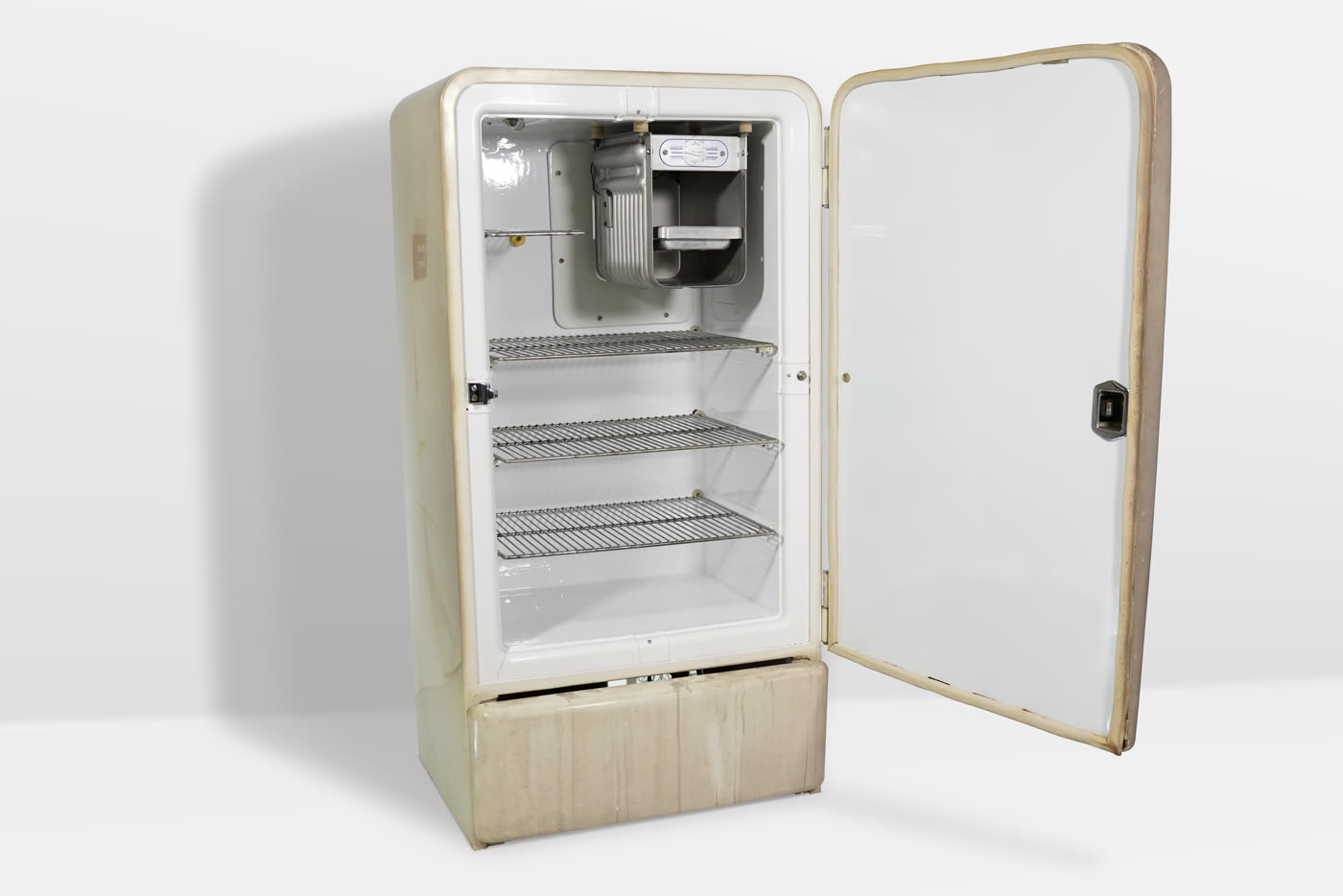
A washer is a box of steel. A refrigerator is a box of steel with a trapped gas and a door that can latch. Cities that are casual about the washer are often strict about the refrigerator, and a few will not touch either one. If you treat them as the same errand, you will set the wrong object on the curb.
The door is about children, and sometimes it is a written rule
An unused refrigerator or freezer with the door still on is a trap. Several cities say so by requiring the door off before they will collect it. Boston will not take a fridge, a freezer, or a mini fridge if the door is attached or if food is still inside. The doors, once removed, go next to the trash for ordinary collection. Minneapolis requires the doors off fridges and freezers and repeats it on the collection-issues page. Austin says appliances are accepted with the doors removed. Philadelphia says refrigerator doors must be removed for the bulk appointment. Washington, DC says the same, and it wants air conditioners drained of water. Seattle says to remove refrigerator and freezer doors that have latches.
Los Angeles does not print that sentence on the bulky page. The page also does not clearly say it will take a household refrigerator at all. Commercial appliances are prohibited, and the Saturday yard bans kitchen appliances and anything with a plug. Call 1-800-773-2489 before you drag a fridge out. If a crew agrees to take it, take the door off anyway while it sits outside. That part is safety, not a fee.
Empty the appliance. A fridge full of food is garbage plus an appliance. Boston will refuse it. Other crews may tag it and leave. Defrost it the day before so you are not dragging a block of ice down the steps.
Refrigerant is not your job to vent
The gas in a refrigerator, freezer, or air conditioner is a regulated refrigerant. EPA's section 608 rules cover people who maintain, service, or dispose of that equipment and recover the refrigerant. They are aimed at technicians, not at a homeowner with tin snips. Cutting the lines in the alley releases the gas and does not produce the paperwork a strict city wants.
Houston is the strict city in our set. Heavy trash will take stoves, washers, dryers, and water heaters. Refrigerators and freezers are accepted only with a certified technician's tag showing the refrigerant has been removed. The not-accepted list repeats appliances that still contain coolant unless that tag is on them. A washer can go out on an even-month heavy trash day. A fridge cannot, until someone certified has done the recovery. Austin, next door in the same state, does not ask for that tag. It asks for the doors off and an appointment. Do not mix the cities up.
Phoenix charges for the gas if it is still in the unit. Residential customers get one free drop-off a year of a freon appliance. After that the environmental fee is $20 per appliance, plus disposal of $55 a ton with a $40 minimum, unless you bring a certificate that the refrigerant was removed. Non-refrigerant appliances, washers through water heaters, can be dropped off up to one ton a month at no cost. Bulk trash will not take the refrigerant appliances at all. The page also says you can schedule a pickup. Call 602-262-6251 and ask for those terms. Do not assume the free annual drop-off applies to the curb.
Denver will not take appliances on large-item day, period. There is a separate free collection for stoves, water heaters, dishwashers, microwaves, refrigerators, freezers, air conditioners, and washers and dryers. Call 311 or 720-913-1311. The city says it sends refrigerant units somewhere the gas can be removed, and that scrap revenue goes into the solid waste fund. You are not paid for the metal. The same page says an Xcel Energy customer can get a $50 rebate for recycling a refrigerator. That is Xcel's program, described by the city. Confirm it when you book. Rebates change without the sanitation page rewriting the sentence the same week.
Portland prints the split as a price. Most appliances are $6 on the city sheet. Refrigerators, freezers, and portable air conditioners are $51. Both sit on top of an $18 trip fee. The hauler decides the category. A mini fridge is still a coolant appliance unless they tell you otherwise. Metro's recycling list takes metal dishwashers, water heaters, washers, dryers, and stoves. It says no plastic appliances. A plastic dorm fridge is not that line.
Seattle charges $31 for the large appliance, same as a mattress, and says it will take CFC appliances and recycle them responsibly. Your job is the empty box, the latched door removed, and the scheduled day. You do not vent it.
Boston's special collection is only the refrigerant machines and the CRT electronics: fridges, freezers, water coolers, ice makers, air conditioners, dehumidifiers. Doors off, food out, intact, not smashed. Five per appointment, ten per year. A washer is not on that page. Do not book a dryer as if it were a freezer. Ask 311.
Who will not come to the house
San Diego's FAQ says there is no citywide bulky pickup. Appliances go to the Miramar Landfill for a fee the FAQ does not print, unless a cleanup event happens to accept them. Call 858-694-7000 before you rent a truck, and ask specifically about refrigerant appliances. A clean mattress is free at the weekday site next door. A refrigerator is not that program.
San Francisco will come, within Recology's free-visit limits: two a year for buildings of five or fewer units, one per unit in larger buildings, ten items a visit. Residential refrigerators, stoves, and washers are on the accepted bulky list. If you drive to Tunnel Avenue instead, washers, dryers, stoves, and dishwashers were posted at $31.22 each plus weight. The refrigerator line on that rate table needs to be read live. We did not guess the Freon surcharge.
New York treats washers, dryers, dishwashers, and ovens as recyclable bulk, set out the night before recycling day, inside the six-item cap. Refrigerators, freezers, dehumidifiers, and air conditioners are called out as special disposal on the large-items page. The summary we read names the category and does not spell every prep step. Open that page before you set a fridge out. Empty it either way.
Minneapolis takes the major appliances on recycling week, doors off the fridge, two large items maximum, with a sign that says For Solid Waste. The city disassembles them and sells the metal. You do not get a check.
Building size, again
The appliance rules above are for people the city actually serves. Austin stops at fourplexes. Houston's heavy trash stops at eight units. DC stops at three. Philadelphia's bulk program stops at six. Boston's special collection is tied to the same kind of residential limit as the rest of its appointments. A refrigerator from a 40-unit building is the private hauler's job. Setting it on a public curb because "the city takes fridges" is how it sits there for a week.
Renters in Portland and Seattle usually cannot book the pickup themselves. The utility or garbage account holder has to authorize the charge. Ask the landlord before you move the appliance to the curb and discover the account holder never called.
A practical order
- Empty it and defrost it.
- Find out whether your city wants the door off, a technician's tag, or both. Houston wants the tag. Most of the others want the door. Phoenix will charge if the gas is still in it after the first free drop-off.
- Do not cut the lines.
- Book the appointment if the city requires one. Denver, Austin, Boston, Philadelphia, DC, and Phoenix's pickup option are not "set it out and hope."
- Keep it out of the bulky pile if the page says appliances are excluded. Denver and the refrigerant line in Phoenix are exclusions, not oversights.
- If you are buying a replacement, ask the delivery crew to take the old one. Many will, because they are already there and they have a way to handle the refrigerant. Get it on the order.
The steel is worth recycling. The gas is not yours to release. Those are the only two facts that survive every city line we read.
Microwaves sit in the middle and cause needless arguments. Denver lists them on the free appliance pickup and also on the e-cycle coupon as a small appliance. Austin files them with appliances on the bulk appointment if the app agrees. New York treats a mostly metal microwave as recycling-day bulk, not as the banned e-waste list. A microwave is not a refrigerator. It does not have a refrigerant loop, and it does not need a technician's tag. It also is not a television. If your city's page names it, use that line. If the page is silent, describe it when you call instead of hiding it inside a sofa. The same courtesy applies to a window air conditioner, which is a refrigerant appliance even though it is smaller than a fridge. Boston, Portland, Phoenix, and DC all treat air conditioners as their own item, with a door rule, a price, or a drain-the-water instruction. A window unit is not "just plastic." Read the coolant line before you set it on the curb.