How to get rid of leftover paint
Last updated
Where leftover latex and oil-based paint can go, which states have PaintCare, and why drying a can is legal in one city and a bad idea in the next.
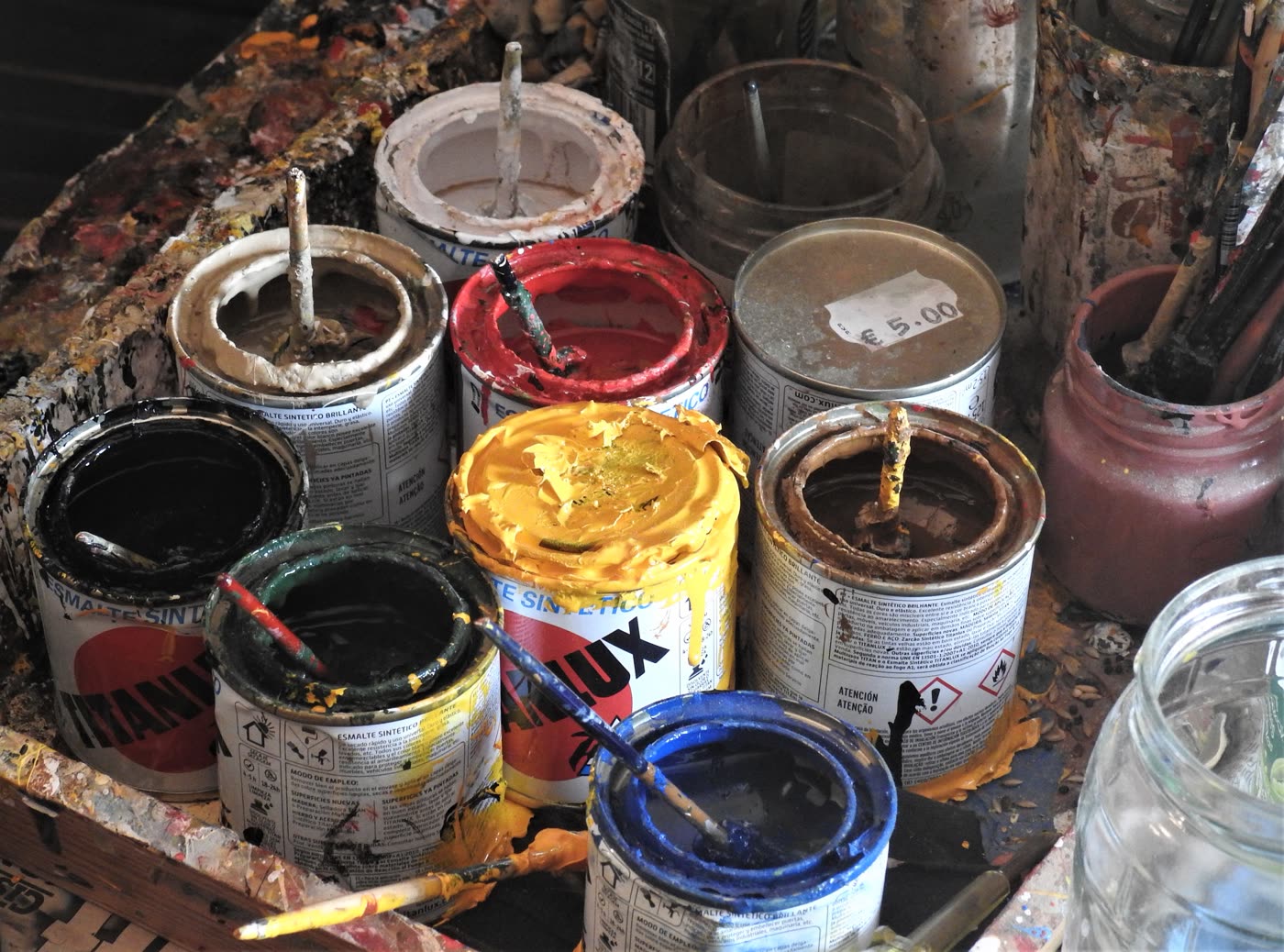
A half-full gallon of paint feels harmless. It is a sealed can in the garage, and the color was a mistake, not a chemical spill. Cities still do not want it in the trash cart while it is liquid. Paint is a household hazardous waste when it is wet, and a recycling feedstock when a program will take it. The difference between those two sentences is the state you live in and, inside that state, the door you show up at.
What PaintCare is
PaintCare is a nonprofit set up by paint manufacturers. In states that pass a paint stewardship law, a small fee is built into the price of architectural paint. The fee pays for drop-off sites, mostly at paint and hardware stores, and for hauling and recycling what comes back. PaintCare's states page says the program runs in twelve states and the District of Columbia. The Maryland launch announcement names the set: California, Colorado, Connecticut, the District of Columbia, Illinois, Maine, Minnesota, New York, Rhode Island, Oregon, Vermont, and Washington, with Maryland itself starting April 1, 2026. An industry interview with PaintCare put Illinois's start in December 2025. We are not going past those pages. If your state is not on the list, you do not have this network, no matter how many blog posts say "just take it to the hardware store."
The drop-off page is the rulebook for a store visit. Sites generally take up to five gallons per visit. Some take more if you call. The can should be the original container with the original label. Leaking, unlabeled, and empty cans are refused. Aerosol coatings are refused under that general rule. California has been widening what the law can cover, including aerosols, but the public drop-off page still says sites do not take aerosol coatings. Follow the page the store is using, not a summary of a bill.
Architectural paint means the coatings you put on a house: interior and exterior latex and oil-based paint, primers, stains, shellacs, varnish, and single-component clear finishes, in cans of five gallons or smaller. Denver's paint page prints a useful not-accepted list that matches what PaintCare describes: thinners, mineral spirits, spray paint, auto and marine paint, craft paint, caulk, two-part coatings, and wood preservatives that contain pesticides. Those products did not pay the fee. A store that takes your wall paint is allowed to hand the thinner back.
Call the store. PaintCare says to. A site can be full, closed for inventory, or out of the program. The locator on paintcare.org is the list. We do not reprint it.
Where PaintCare does not exist
Texas, Arizona, Massachusetts, and Pennsylvania are not PaintCare states, and they are places we checked city by city. The substitute is the city's own hazardous waste system, and those systems do not look alike.
Houston runs two environmental service centers. The current page takes latex and oil-based paint, up to 25 gallons a visit, on top of a separate 100-pound limit for other chemicals. The south center, at 11500 S. Post Oak Road, is open Tuesday, Wednesday, Friday, and Saturday, 8 a.m. to 5 p.m. The north center, at 5614 Neches Street, is open the second Thursday of the month, 9 a.m. to 3 p.m. You need proof of a Houston address. Heavy trash day will not take the cans. A can in the mattress pile can get the whole pile refused.
Austin will pick paint up, but not at the curb. On-demand household hazardous waste is an appointment, up to three times a year for houses and fourplexes. Containers under five gallons, 30 gallons total, in a labeled box on the porch or in the garage. Never at the curb. Paint thinners ride in the same box.
Phoenix will not take paint in the bulk pile. Solid waste customers get one hazardous-waste home collection a year. The box is labeled HHW and left by the door, not the sidewalk, out by 7 a.m. for a pickup window that lasts until 5 p.m. You need the account number from the city bill.
Philadelphia does not describe a standing center. It runs collection events. The 2026 calendar had seven dates and ended on November 7, 2026. As of our check on November 20, that season is over. The announcement said dried or solidified latex can go in the regular trash, and that liquid paint should not. Oil-based paint was an event item. Do not drive to last year's address. Wait for the next calendar on phila.gov, or use the city's donation and recycling finder if it lists a paint option that is still open.
Boston's public-works pages that we read cover mattresses and refrigerant appliances. They do not name a paint facility. Massachusetts is not PaintCare. Call 311 at 617-635-4500 rather than inventing a drop-off from a neighboring state.
Latex and oil are not the same can
Seattle is the cleanest example. The hazardous waste facilities accept oil-based paint, thinners, and solvents. The not-accepted list names latex paint and latex stain. If you bring a can of water-based wall paint to that facility, they can hand it back. Washington is a PaintCare state, so the latex goes to a store. The oil-based can can go either to PaintCare or to the hazardous waste facility. Thinner stays at the facility. PaintCare does not want it.
Los Angeles sends all of it, latex and oil, to a S.A.F.E. center, along with solvents and propane. The visit cap is 15 gallons or 125 pounds of hazardous waste total, not 15 gallons of paint plus a car full of pesticides. Weekend hours vary by center. The Washington Boulevard center posts Saturday and Sunday, 9 a.m. to 3 p.m. PaintCare stores are the other California door, at the five-gallon retail cap.
San Francisco prints two limits. The hazardous waste page says up to five gallons at a list of hardware stores. The transfer station page says 15 gallons of paint, oil, and other chemicals at 501 Tunnel Avenue, Thursday through Saturday. We did not pick a winner. Use the number on the door you are walking through, and call. Recology also gives away recycled paint at the facility, in a short list of colors, first come, first served. You do not have to live in the city to take the free paint. You do have to live there to drop paint off.
Denver tells you to use PaintCare and to keep liquid paint out of the trash, the recycling, the compost, and large-item day. The household hazardous waste kit, once a year for $15, is for the other chemicals. The instructions say to take paint out of that bag if you need the space, because the paint can be recycled at no charge. A public-health page adds that fully dried latex can go in the trash, and that you should not set cans of paint thinned with water outside. Read that as a narrow case for a can that is already solid, not as permission to dump liquid paint.
New York City special waste sites take up to five gallons of paint, Tuesday through Saturday. New York is also PaintCare, so a store is the weekday option and the special waste site is the option for a can a store will not touch.
Portland's Metro facilities take paint free for households, up to 35 gallons measured by container size, and Oregon is PaintCare on top of that. Bring containers smaller than five gallons if you can. Put the paint at the hazardous waste desk, not on the garbage floor.
Drying paint is a local instruction, not a law of physics
You will see the same tip everywhere: stir in cat litter, leave the lid off, wait until it is solid, throw it out. Some city pages say a version of that for latex only. Philadelphia does. Denver's health department does, for latex that is fully solid. A lot of other pages never say it. Los Angeles, Houston, Austin, and Seattle do not tell you to dry latex and trash it. Seattle's facility refuses latex and points the system at PaintCare instead. If you dry a can and throw it out in a city that still considers it hazardous, you have not followed the rule. You have followed a different city.
Oil-based paint does not get the dry-and-trash treatment on any page we checked. It is a solvent-borne coating. It goes to a hazardous waste site or a PaintCare store that accepts oil-based architectural paint. Do not pour it on the ground to "let it dry." Do not pour it in a sink, a storm drain, or a vacant lot. The EPA's household hazardous waste page exists because products like this are a problem in landfills and in water, not because a blog needed a warning label.
How to show up so they take the can
Keep the original can and the label. If the label is gone, a PaintCare store can refuse it and a hazardous waste site is the better stop. Do not combine leftover colors into one bucket on the way over. Mixed, unlabeled sludge is hard to place. Close the lid so the can does not leak in the car. A leaking can is on the refuse list at PaintCare sites. If the lid is warped, bag the can upright in a tray.
Five gallons is the common retail cap. Houston's 25 is a facility cap, not a hardware-store cap. Los Angeles's 15 gallons or 125 pounds is the whole hazardous load. Austin's 30 gallons is the whole hazardous appointment, and no single container over five gallons. If you have more than the cap, it is a second trip, not a bigger day at the curb.
Businesses are a different category. PaintCare has generator limits for oil-based paint, explained on its site. Very small contractors sometimes qualify and sometimes do not. A San Francisco or Los Angeles hazardous waste site that takes households may charge a business or refuse it. Houston's centers are for residents with proof of address. Do not put a job-site load through a household program and hope the attendant does not ask.
Empty cans
An empty can is not leftover paint. PaintCare will not take it. Once a can is truly empty and dry, it is metal or plastic packaging. Whether your city wants it in recycling or trash is a cart question, not a paint question. If you can still pour, it is not empty. Scrape it out, use it on a primer coat, or take it as leftover paint. Buying less in the first place is the only step that does not involve a car. Denver's paint page says a gallon covers about 400 square feet of smooth wall. That is their planning figure, not a law. It is still a better guess than buying a five-gallon bucket for a bathroom.
If we have not written your city
PaintCare's locator is the first check if your state is on the list. If it is not, the county household hazardous waste program is the usual second check. Event calendars go stale. Philadelphia's 2026 list is the cautionary example: seven real dates, all of them over by mid-November. A flyer on a refrigerator from last spring is not a schedule.
Do not put the can in a bulky pile to "see if they take it." In the cities we read, that is how an otherwise legal sofa gets left on the curb, because the crew will not sort paint out of a pile of furniture.